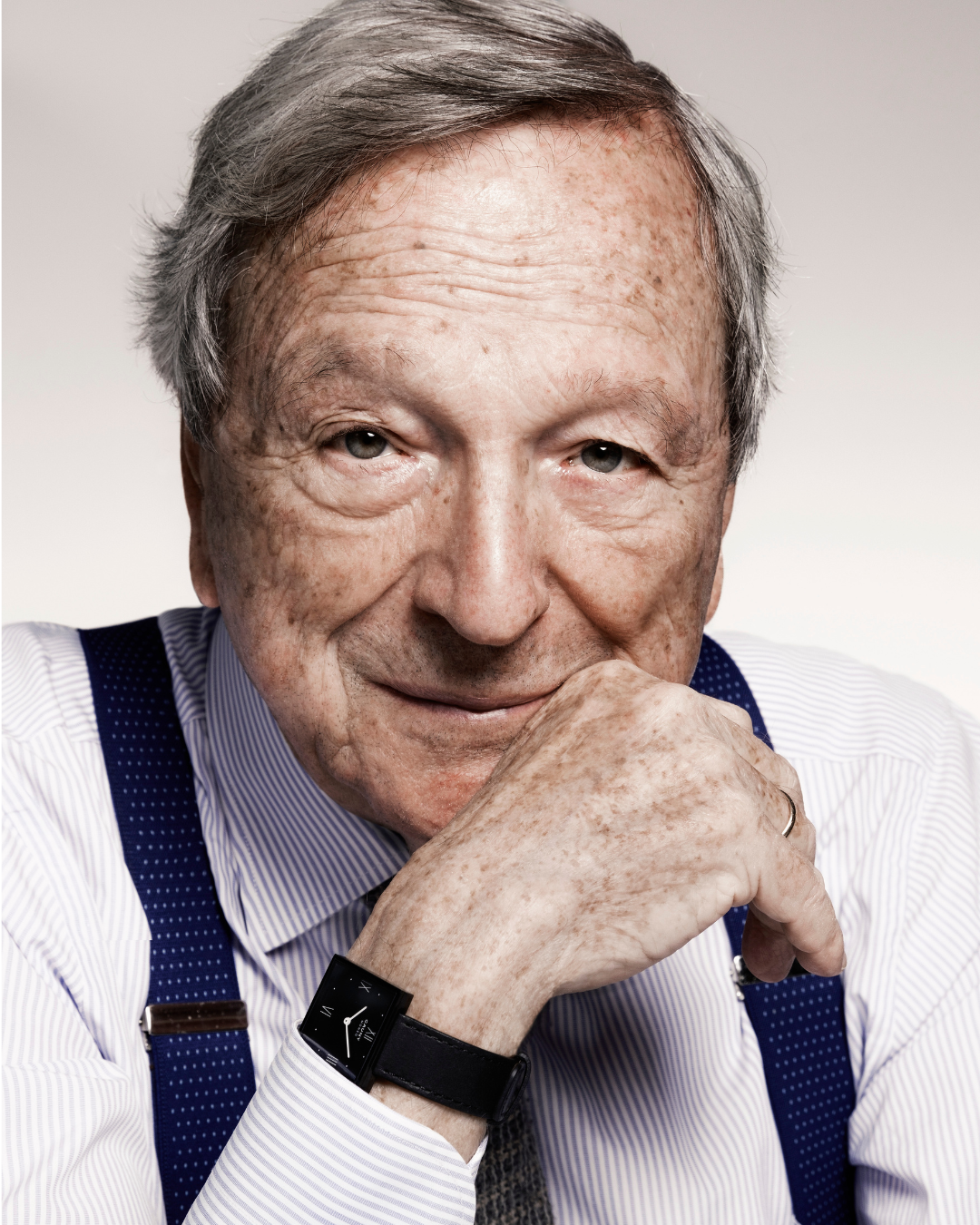
Cauny x Rafael Moneo

The Cauny Moneo is a watch collection designed by Spanish architect Rafael Moneo, winner of the 1996 Pritzker Prize and one of the most influential figures in modern architecture.

When Cauny invited Moneo to design a watch, he immediately thought of the two clocks he had previously created — one for the Logroño City Hall and another for Madrid’s Atocha Station. In both, time was not a mere sequence of moments but a reflection on the rhythm of the day, on the light that changes and the hours that give meaning to human activity.

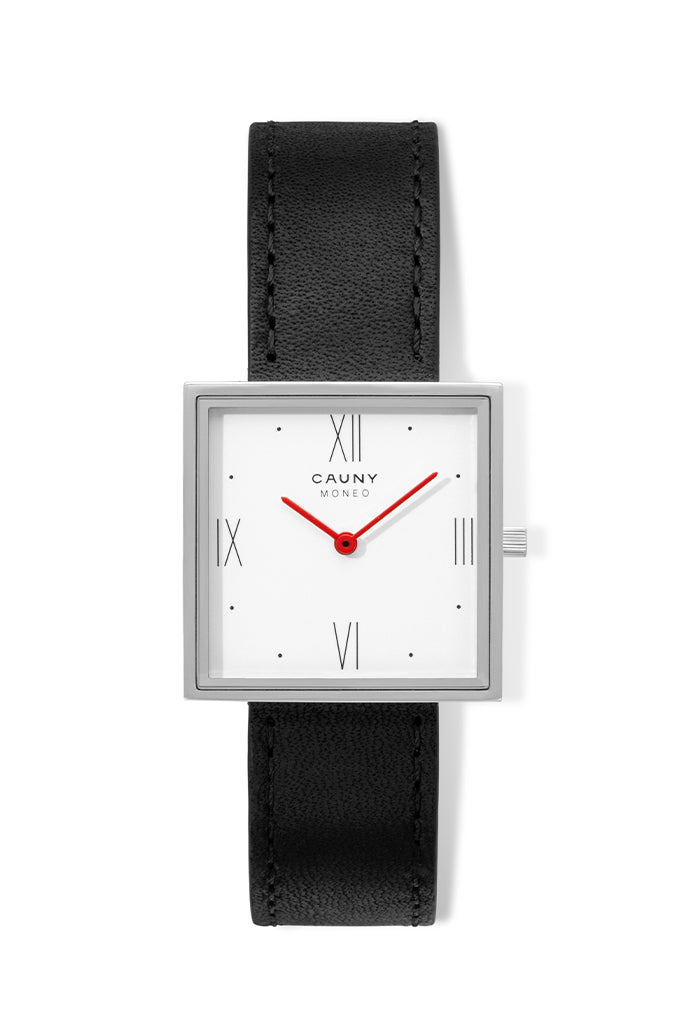
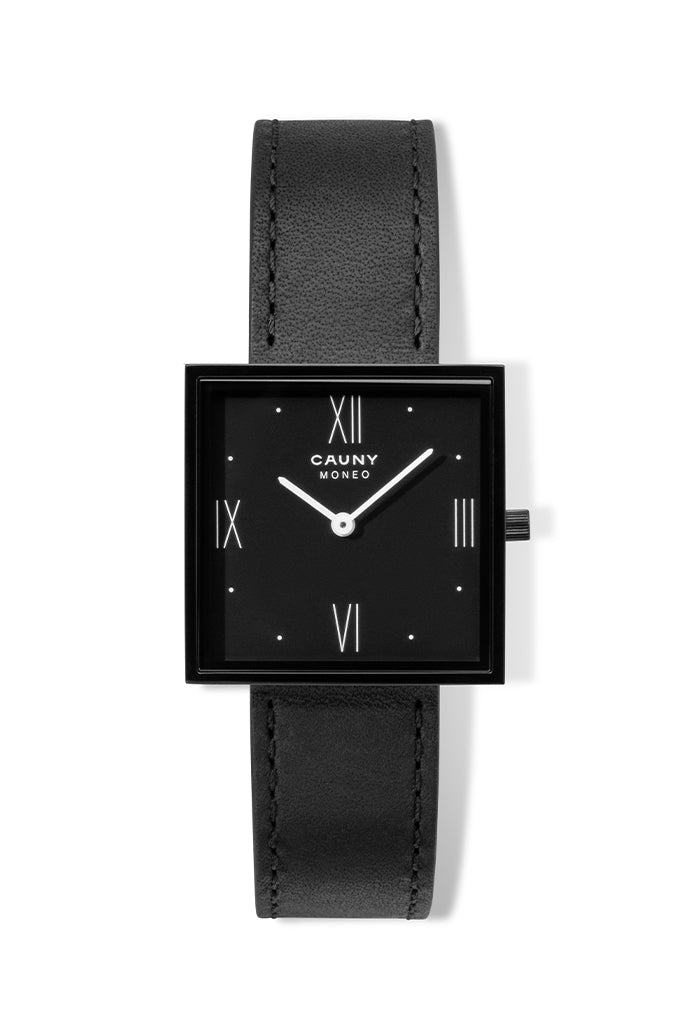
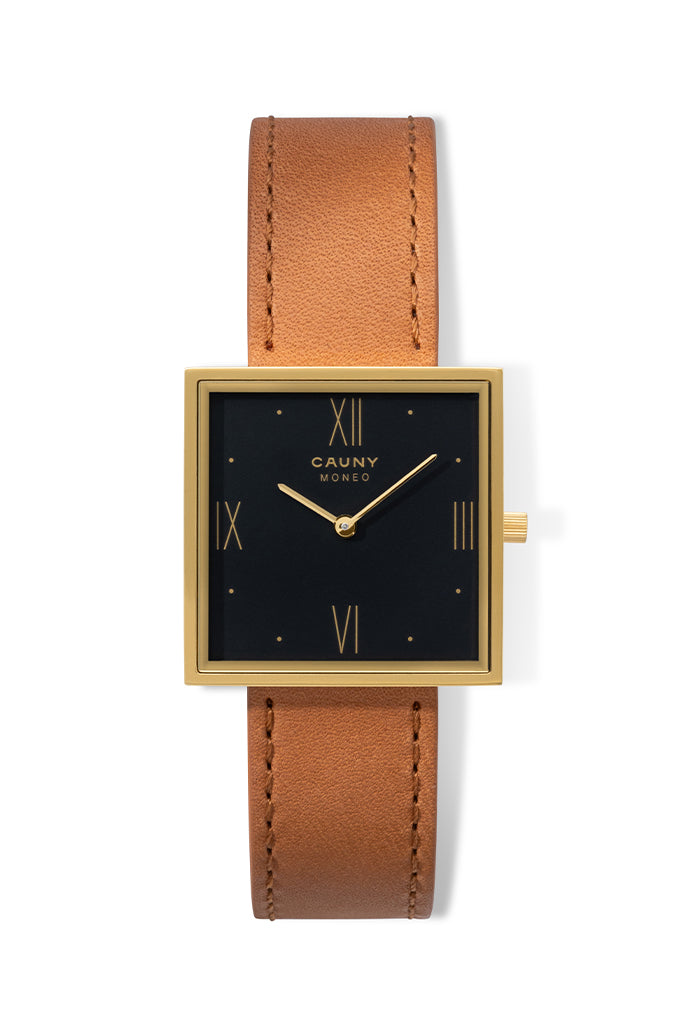
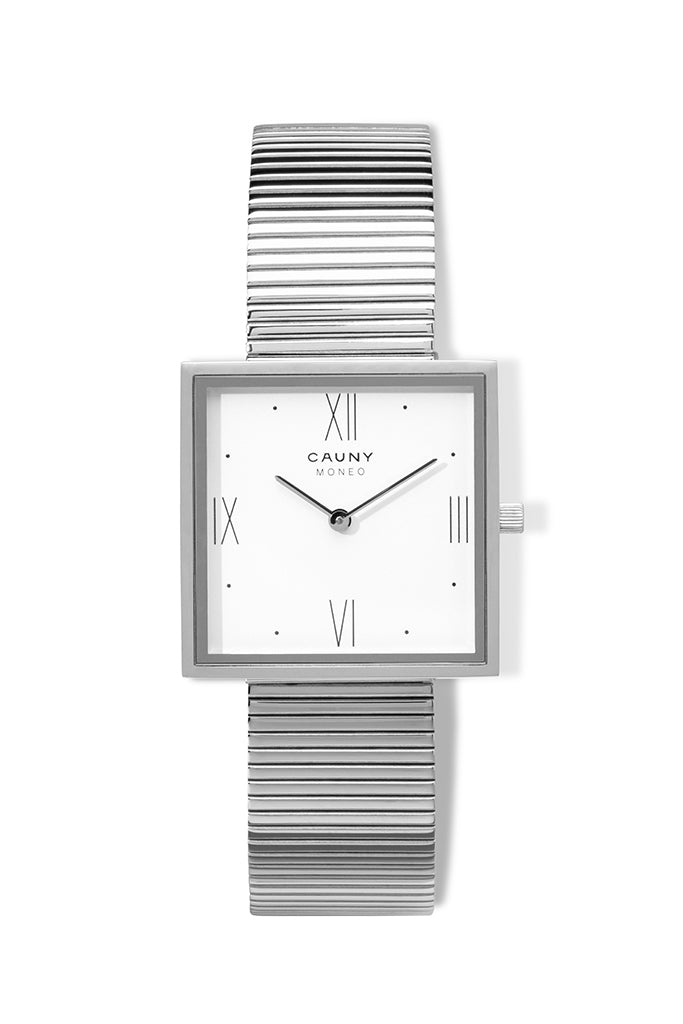
The Cauny Moneo carries this same architectural logic. The dial takes the form of a perfect square — a symbol of balance and measure — where the Roman numerals evoke ancient timekeeping and connect the contemporary object to the long history of how humans have sought to mark time. Its clean geometry and sober lines reflect the essence of Moneo’s architecture: disciplined, thoughtful, and profoundly human.

For those who appreciate order and restraint, the Cauny Moneo is not just a watch — it is a study in proportion, a quiet reflection on time as architecture itself.

Author's note

Moneo on his Cauny:

"When Cauny asked me to design a watch I couldn’t help but think of the two occasions on which I had designed clocks: for the Logroño City Hall and for the Atocha Station.

In both cases, the clock alludes to the meaning of the hours associated with the passing of the day: twelve o’clock — noon — as the summit of the day. The hours related to daily activity, distinguishing between morning and afternoon. Not as a succession of moments, something that so clearly happens with the beat of digital clocks. And the hours in Roman numerals and on the axes of the square, something that we so often see in sundials on the walls."

Rafael Moneo

Brief biography

Rafael Moneo was born in Tudela (Navarra) in 1937 and has been one of the most notable figures in the world of architecture in the last 50 years. He received the Pritzker Prize in 1996 for his entire work.

He studied at the School of Architecture in Madrid, wher he graduated in 1961. After graduating, he worked in Denmark with Jørn Utzon, with whom he collaborated in the Sydney Opera House. In 1970, he obtained the Chair of Elements of Composition at the School of Architecture of Barcelona. In 1985, he was appointed Chairman of the Graduate School of Design at Harvard University.

He is the author of famous buildings such as the National Museum of Roman Art in Mérida, the Museum of Modern Art in Stockholm, the Museum of Fine Arts in Houston, the Kursaal Conference Centre and Auditorium in San Sebastián, the Expansion of the Prado Museum and the Atocha Station in Madrid or the Los Angeles Cathedral.

He has combined his intense practice of architecture with a long work of reflection and criticism. Several generations of architects have been influenced by his texts, among which his famous essay The Solitude of Buildings stands out. He wrote: “I prefer to think that architecture is the air that we breathe when buildings have reached their radical solitude.”

In addition to the Pritzker Prize, he received numerous awards, including the Royal Gold Medal of the Royal Institute of British Architects in 2003, the Prince of Asturias Award in 2012, the Praemium Imperiale of Japan in 2017 and the Golden Lion of the Venetian Biennale in 2021.


What others are saying

Meet the Collection